MetabolismInflammationBiomarkers
Cancer-Associated Cachexia
The lab investigates the metabolic and inflammatory drivers of cachexia to identify biomarkers, mechanisms, and intervention points that improve patient outcomes.
Cancer Biology · Metabolism · Immunology · Translation
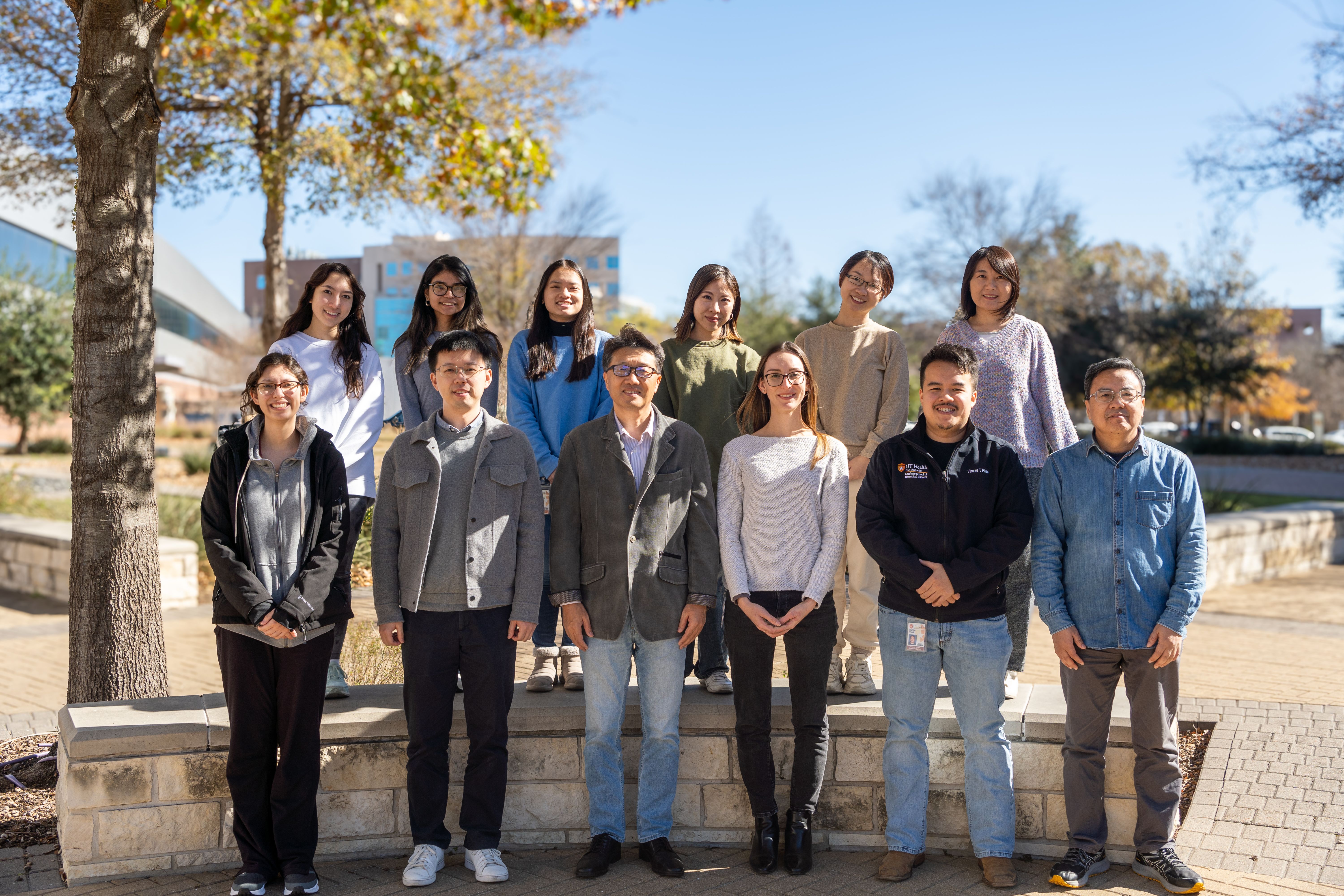
Gang Huang Lab is an interdisciplinary research group at UT Health San Antonio and Mays Cancer Center spanning hematology, solid tumors, metabolism, immunology, trauma research, and product development.
UT Health San Antonio and Mays Cancer Center
0
Peer-reviewed publications
0
Lab members
0
Research programs
0
Spinout companies
Overview
At The Huang Lab, we are dedicated to advancing the understanding and treatment of human disease through rigorous, multidisciplinary research. Under the leadership of Dr. Gang Huang, our team seeks to bridge fundamental discoveries with real-world applications, with a particular emphasis on hematology, metabolism, cancer biology, medical product development, CAR T-cell therapy, trauma research, and military health.
We focus on the complexities of both blood-related cancers and solid tumors while exploring how metabolic pathways and immune responses influence disease progression. By integrating expertise across these domains, we strive to develop innovative interventions that improve patient care and outcomes worldwide.
Research
The lab investigates the metabolic and inflammatory drivers of cachexia to identify biomarkers, mechanisms, and intervention points that improve patient outcomes.
The lab studies MDS, MPN, acute leukemia, and blood disorders by connecting stem cell regulation with mitochondrial metabolism and epigenetic control.
The lab builds next-generation immunotherapies for solid tumors, with emphasis on liver cancer, CAR T-cell engineering, and the tumor immune microenvironment.
The lab develops synthetic blood oxygen carriers and trauma-relevant therapeutics, working with the U.S. Army Institute of Surgical Research and Department of Defense partners.
How we work
Mechanisms of cancer, metabolism, immune dysfunction, and trauma at the bench.
Models and translational assays that pressure-test each target and technology.
Companies formed around validated technologies — like Powerhouse Therapeutics.
IND-enabling studies, manufacturing, capital, and partnerships that carry products to market.
Therapies reaching patients — in clinics, trauma care, and the field.
Spin-outs

A Huang Lab spinout developing solid tumor immunotherapies, led by its IT-ACTS platform.
Join the lab
The lab welcomes postdoctoral scholars, graduate students, undergraduates, post-baccalaureate researchers, and staff who want to work on cancer biology, metabolism, immunology, genetics, and translational therapeutics.
Prospective trainees should fill out the application form and contact current lab members about positions.
News
Jun 15, 2026
The Huang Lab published a review in Hematological Oncology on the biological barriers limiting CAR T cell therapy in solid tumors and the engineering strategies to overcome them.
Read articleJun 10, 2026
Vincent Pham was named a 2026 Future Texas Business Legend by the Texas Business Hall of Fame, receiving the Carlos & Malú Alvarez Award.
Read articleMay 12, 2026
Alejandra Lorenzen will present Huang Lab work on a synthetic blood oxygen carrier at the AIM 2026 Health R&D Summit.
Read article